
Brush, can, or sprayer.
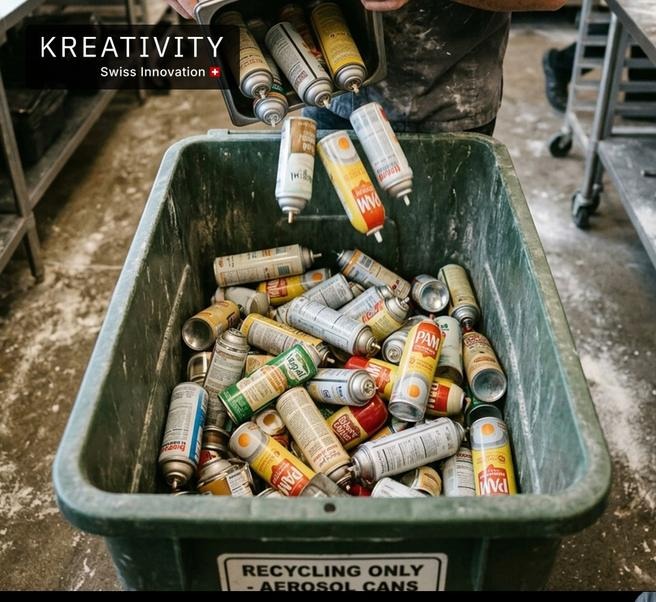
Three ways to coat food, in the order they arrived. Each solved the problem of its day. Side by side, here is where each one stands.
| Pastry brush | Aerosol can (e.g. PAM) | KREA Swiss sprayer | |
|---|---|---|---|
| Speed at volume | Slow, piece by piece | Fast | Fast, a full tray in seconds |
| Finish | Streaks, uneven | Overspray, pooling | Fine, even layer |
| Cost per use | Low tool cost, wastes material | ≈ $8-10 per can | ≈ $2 or less per fill |
| Propellant / waste | Sheds bristles | Propellant, single-use cans | None, refillable |
| Materials | Any, but messy | One per can | Oil, glaze, egg wash, butter… |
| On the body | Hard on wrists & back | Easy | Easy, work upright |
The pastry brush
Cheap, simple, and it gives a feeling of control, which is why it lasted so long. For a few dozen items a day it is fine. At volume it carries too much liquid and lays it unevenly, so one piece gets more than the next. It leaves streaks, sheds the odd bristle, soaks up and wastes material, and it is slow and hard on the wrists tray after tray.
The aerosol can, for example PAM
The first move towards speed, point and spray, no brushing. But it is expensive and limited. Around $8 to $10 a can at volume, and you pay for the propellant in every one, then store and dispose of it. Held close it oversprays and pools, so the finish is not even. And each can holds one material, so a kitchen running oil, egg wash and glaze needs a shelf of them.
The electric food sprayer
The same speed as the can, without its cost, waste or limits. A fill costs about $2 or less, often far less, because it is ordinary food-approved liquid, no propellant to buy or bin. It lays a fine, even layer that uses less material and gives a better, more repeatable finish, and the spray is more powerful and under your control. One device takes many liquids, oil, glaze, egg wash, butter, cocoa butter, release agents, you change the container, not the can.
A bakery replacing two cans a day usually recovers the cost of the sprayer in three to four weeks.
One caution
The saving tempts some kitchens to grab a cheap paint or utility sprayer instead. Do not. Those were never made for food contact and can pass lead, nickel and plastic compounds into what you spray. A proper food sprayer is food grade throughout, comes apart to be cleaned, and carries a Declaration of Conformity. That is the thing a spray can and a paint gun both lack.
The tool that replaces both. The foodSPRAY Pro, see what it costs you with the savings calculator.
Frequently asked
Is a cooking spray cheaper than a sprayer?
Per can, yes, a cooking spray costs less up front. Per use, no. A can runs about $8-10 and is gone in a day or two at volume, while a sprayer fill of ordinary oil costs about $2 or less and refills from a bottle you already have. Most kitchens replacing two cans a day recover the cost of the sprayer in three to four weeks, then the saving compounds every day after.
Can I use a paint sprayer for food?
No. A sprayer built for paint is made from materials never regulated for food contact, and under real use conditions can pass lead, nickel and plastic compounds into whatever you spray. A proper food sprayer is food grade throughout, comes apart to be cleaned to a hygiene standard, and carries a genuine Declaration of Conformity, none of which a paint or utility sprayer can offer.